The Craft

How a Pure Fidelity turntable comes to be.

Three things make a Pure Fidelity turntable what it is: the man who designs it, the principles he builds by, and the small workshop where every one is made.

This page covers all three, with the short films we made along the way.

The brand, in its own words.

An introduction to the workshop and the people behind every Pure Fidelity turntable, before the chapters.

Chapter I

The maker.

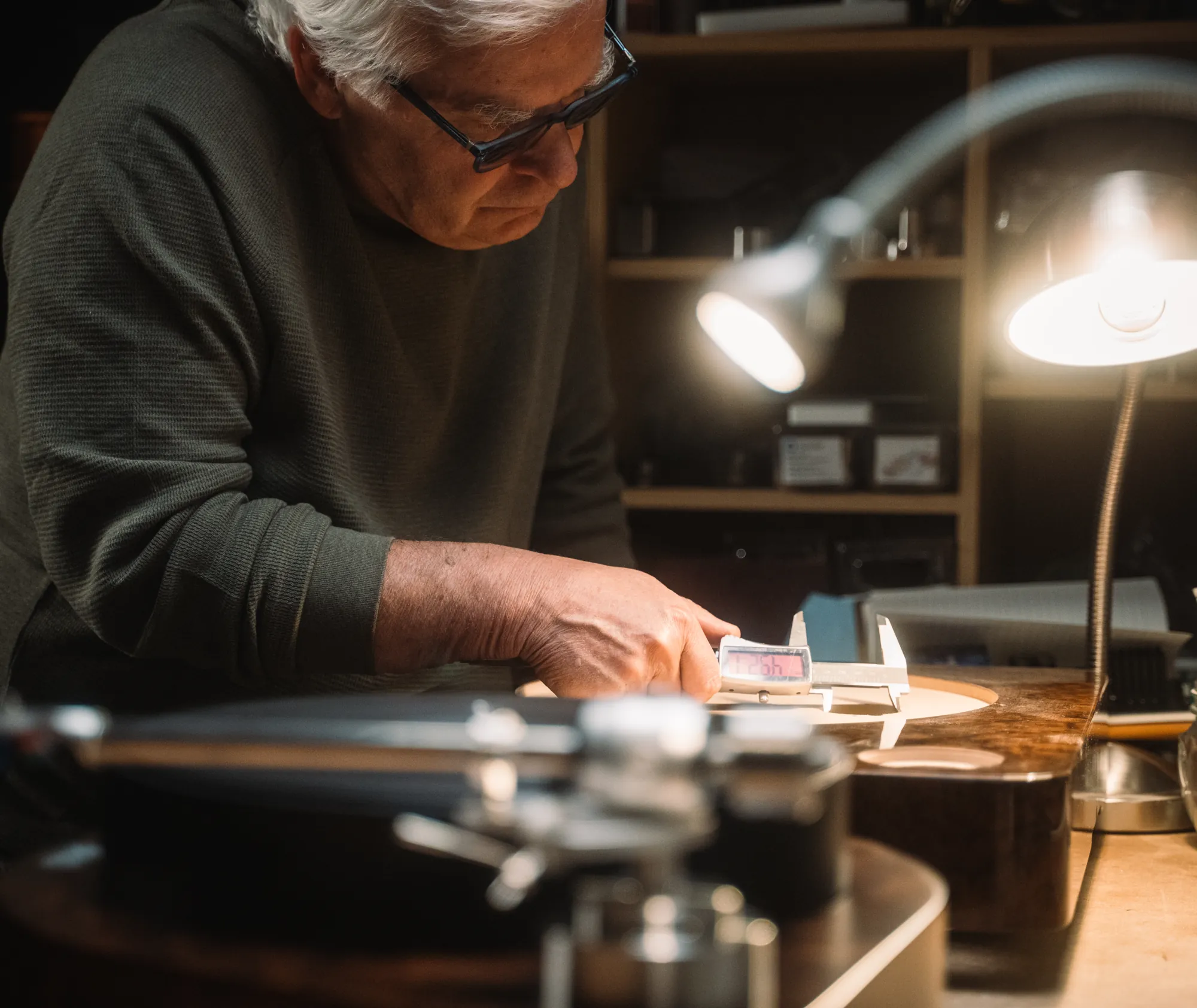
John Stratton measuring at his bench, with a Walnut Burl Symphony and a Walnut Burl Allegro

John Stratton.

Turntable Master Craftsman.

Origin

He built the turntable he wanted to buy.

John Stratton did not come to turntables as an engineer. He came as a customer. Decades of listening had taught him exactly what he wanted from a turntable, and why he could not find it. Heavy tables sounded stable but slow. Light tables sounded quick but thin. Suspended designs could be superb, then needed adjusting again a month later. As he told Resistor Magazine, “My goal was simple. I wanted to develop a line of turntables that I would buy myself.”

So he wrote down what a turntable has to do. It must sit level, hold the tonearm without moving, turn at the right speed and stay there, and keep vibration out, both from the room and from itself. Everything beyond that is a design choice, and John makes design choices on performance, never on marketing.

2015
Pure Fidelity founded
Class A
Stereophile, every edition since 2023
1/1000"
CNC tolerance

Modifying

He started with other people’s turntables.

Pure Fidelity began with parts. John made sub-platters, platters, bearings and feet for other makers’ turntables, to a higher standard than the originals. The improvement surprised him, and it surprised the owners. Friends sent him their tables, then friends of friends.

When a friend asked whether he had thought of building a complete turntable, John had a plinth made and assembled a table around it. He took it to Audiophilia in Victoria for an informal listen. A few days later Anthony Kershaw called to ask for a formal review. The table earned a Star Component designation, and a year later Audiophilia named it Product of the Year. Pure Fidelity was founded in 2015, and its turntables have been in Stereophile’s Recommended Components, Class A, in every edition since 2023.

Building

A hybrid approach.

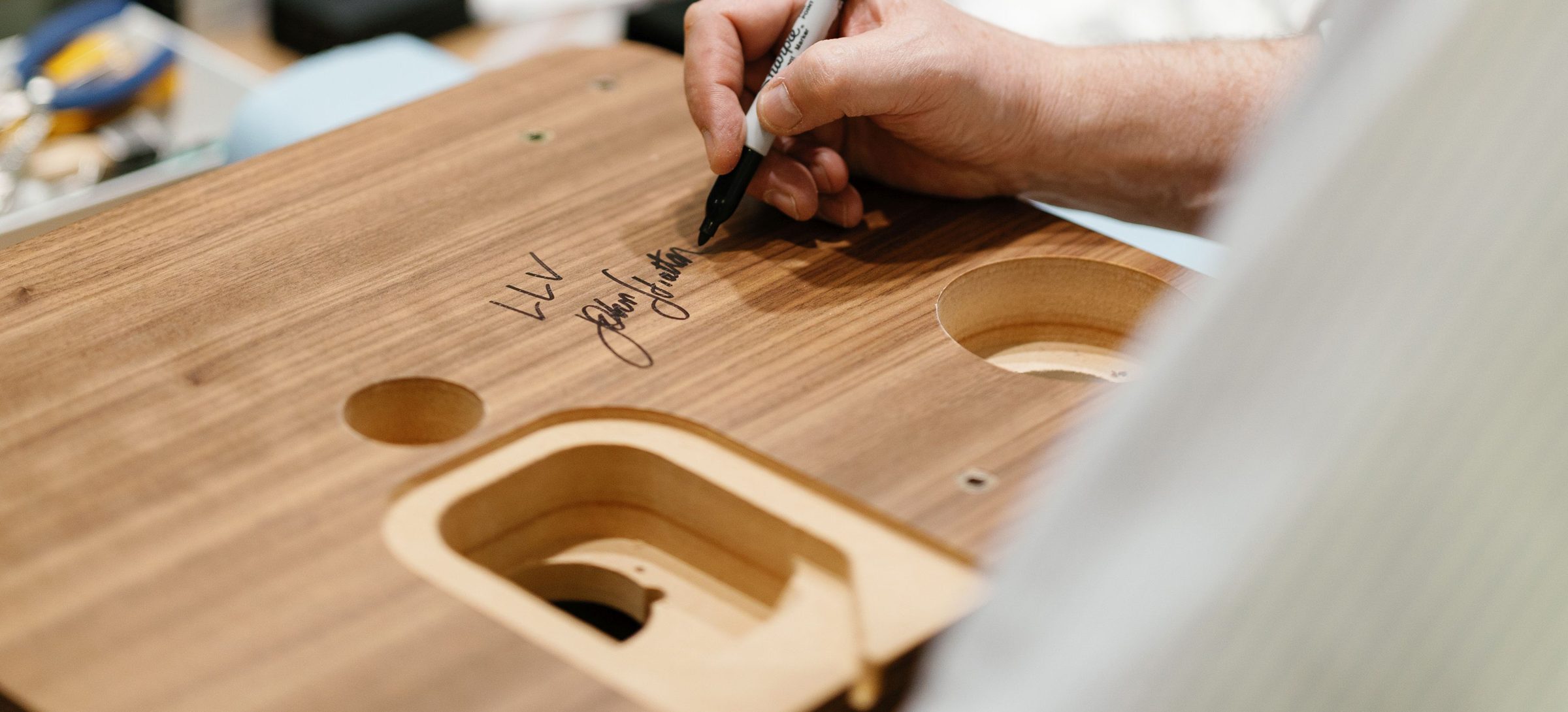
The first Pure Fidelity turntables were built on the principles that still guide every table: intermediate-mass plinths in Ultra MDF, parts machined on CNC, and veneers laid by hand. Every plinth is signed before it leaves. John began signing them because he wanted his name on each table that left his bench, as a matter of accountability.

Watch / Veneers, 3:43John on the wood. One piece for the face, never a seam. A short length of Santos rosewood most makers would throw away. A knot placed where the platter will hide it. Nothing goes to waste.
"The Symphony's performance is up there with the very best I've heard, and some of those 'tables cost twice or three times as much as the Symphony."
Anthony Kershaw, Audiophilia   ·   Star Component, 2024

Today

Still small.

More than a decade on, the workshop is still small, and the tables are still built one at a time in Vancouver.
Chapter II

Seven principles behind every table.

01 / The Hybrid

The hybrid design.

High-mass turntables can produce solid bass but tend to sound dull. Low-mass turntables can be fast and dynamic but tend to sound bright. Suspended designs can time well but lack weight in the bass.

John’s intermediate-mass approach, built on a rigid Ultra MDF plinth with no suspension, takes the strengths of each. That plinth is the foundation of every Pure Fidelity turntable.

02 / Proven Materials

Proven materials.

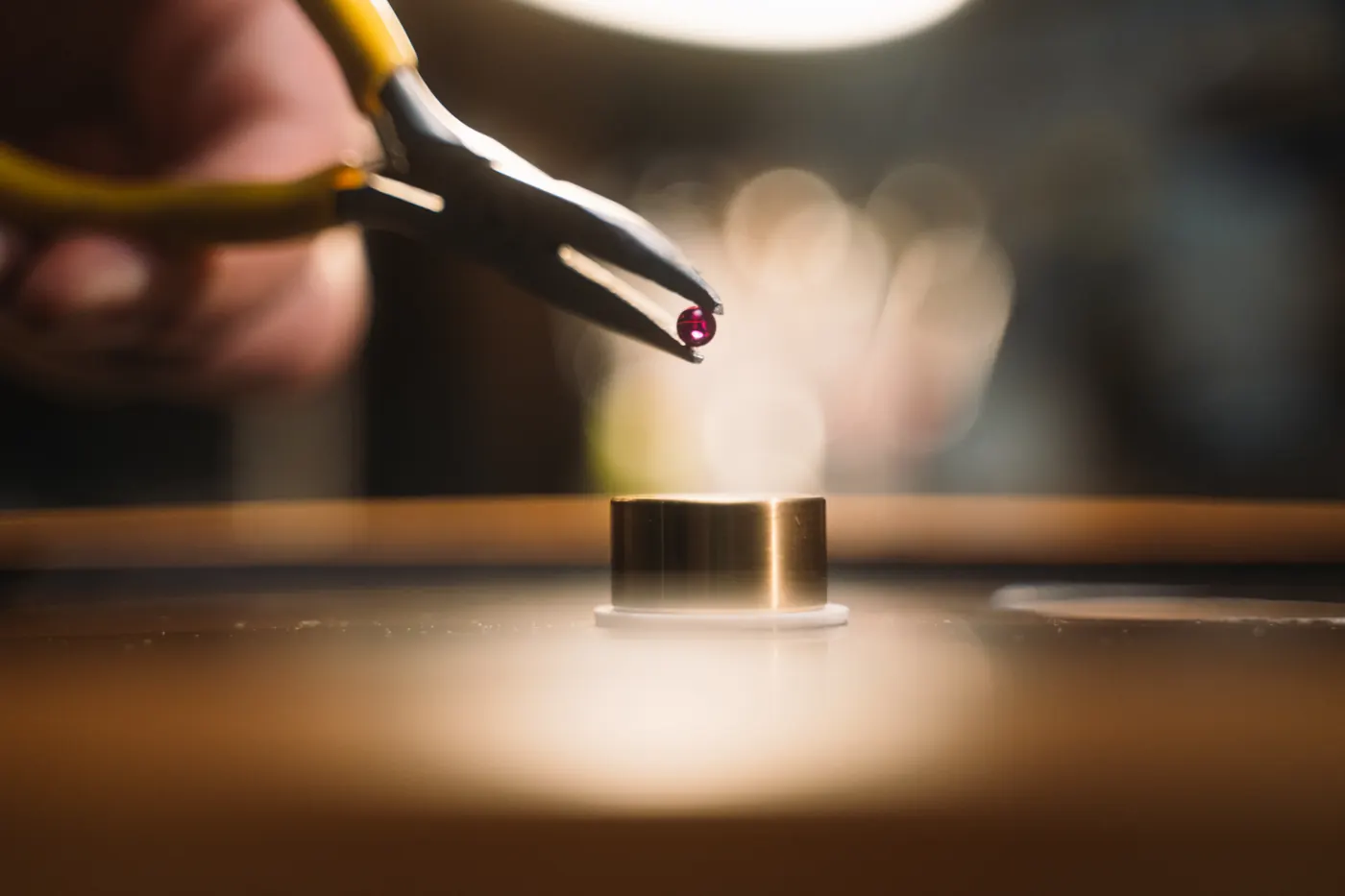
We do not chase the latest breakthrough. Bronze has been worked for more than five thousand years, 6061 aluminum since the 1930s, and Delrin since the 1960s. Our bearing shows the idea best. Every Pure Fidelity turntable turns on a ruby ball, rated 9 on the Mohs scale of hardness, one step below diamond. The ball sits in a well of bronze, beneath a shaft of stainless steel: three hard, proven materials, with very little friction between them. We could buy a hundred steel balls for the price of one ruby. We use the ruby. Our aim is not to reinvent the turntable, but to build it better.

A ruby ball, held in tweezers above a bronze bearing well
The ruby, above its bronze well.
03 / Other Masters

The best parts, whoever makes them.

Our footers come from IsoAcoustics, and our tonearms from Origin Live and Audio Origami. When another maker builds something better than we could, we use it.

04 / Tight Tolerances

Consistency.

We machine parts on CNC to a thousandth of an inch, about a third of the thickness of a human hair, so that every table performs like the last.

Every Conductor speed controller is calibrated by hand to the motor it will drive, so each table arrives turning at exactly the right speed.

Watch / CNC machining, 2:37Precision, accuracy, repeatability. The two-inch ultra-MDF core and why it was never a shortcut. Even the foam in the box is chosen on merit: no table has ever arrived damaged.
05 / Careful Listening

Designed by ear.

Some makers design to the numbers. We measure everything, but we design by ear. Every major decision is made over hours of listening, on familiar reference systems, with familiar records.

06 / Great Analog

Analog itself.

When people hear how good a turntable can sound, they rediscover their records. That is why we build turntables at all.

07 / Built to Grow

Built to grow.

A turntable should grow with its owner. An Encore becomes a Harmony with four parts: the aluminum isolation platform, the GAIA IV footers, the larger platter and the larger sub-platter. A standard Conductor can be upgraded to a Conductor SE. Tonearms and armboards can change as a system does, and an original Harmony reaches Mk2 performance with a Conductor.

Every upgrade is the same part we fit in the workshop.

Chapter III

Where it all comes together.

The workshop

A small shop in Vancouver.

In the workshop, plinths are machined on CNC, veneered by hand, and finished in the paint booth, which John calls his favourite room. Delrin platters come off the machine needing no polishing. Even the packing foam is chosen with care: no table has ever arrived damaged.

Watch / Paint and platter, 3:03The mill shop. The paint booth, John's favourite room, where plinths turn into furniture. And the Delrin platters that come off the machine needing no polish at all.
John Stratton signing the underside of a walnut plinth at the bench

Every plinth

Signed by the maker. By hand. Every time.

John Stratton’s signature

Now you know how it's made, and who makes it.

Every Pure Fidelity turntable is built to order, one at a time, in Vancouver. Contact us to talk through configuration, lead time and the right setup for your system, or hear one first at a dealer near you.